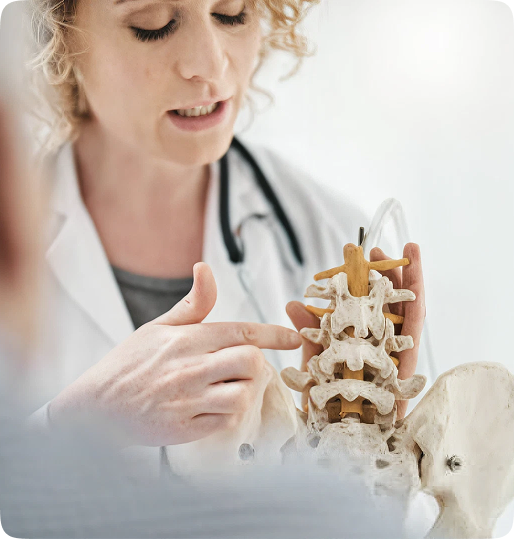
Osteoporosis is a common bone disease that causes bones to become weaker and more likely to fracture. Because bone loss happens gradually, osteoporosis can progress without noticeable symptoms until a fracture occurs.
Early diagnosis and treatment can help strengthen bones, reduce fracture risk, and preserve long-term mobility and independence.

Osteoporosis is characterized by decreased bone density and bone strength, making bones more susceptible to breaks and fractures. The condition most commonly affects the hips, spine, and wrists. Although osteoporosis is more common in postmenopausal women, it can affect both men and women as they age.
Several factors may increase the risk of developing osteoporosis, including:
Diagnosis typically involves a medical history review, physical examination, and bone density testing.
While osteoporosis cannot always be reversed, treatment can help strengthen bones, slow bone loss, and reduce fracture risk.
You should consider an osteoporosis evaluation if you have:
Early diagnosis and treatment can help prevent fractures and preserve long-term bone health.